



04 Jun Organizing an ADU so it Feels like a Real Home, not a Storage Annex
First, an ADU can be a guest house, a rental, a home office, or a space for family. Therefore, before buying containers or furniture, we define how the space will be used day to day. Additionally, when we begin with intent, ADU organizing becomes simple, because every decision has a filter.
Set up “Small but Complete” Zones
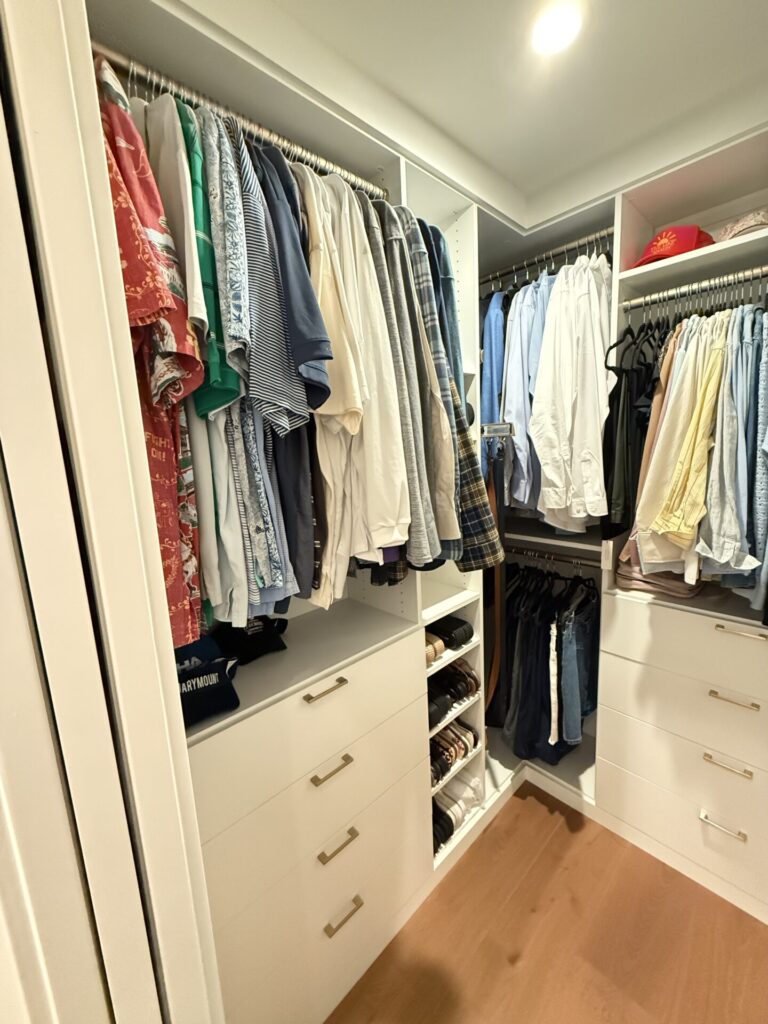
Next, we create full-function zones in miniature: sleep, cook, bathe, work, and store. For example, a compact kitchen still needs a prep area and a few logical drawers. Meanwhile, a tiny closet still benefits from hooks and shelf dividers. Consequently, ADU organizing prevents the common problem of owning the space, but not being able to live in it.
Storage Should be Built-in, Invisible, and Easy
Then, we prioritize vertical storage, closed storage, and multi-use furniture. Furthermore, we choose containers that stack cleanly and can be labeled quickly. As a result, ADU organizing stays tidy without constant effort. On the other hand, open shelves everywhere can look cute and still collect clutter, so balance matters.
Design for Turnovers, Even if We Do Not Plan to Rent it
Additionally, life changes, and ADUs often change roles. Therefore, we keep an owner’s closet or one locked cabinet for supplies, linens, and backup items. Similarly, we create a simple inventory list for what lives there. Consequently, ADU organizing supports flexibility, because we can reset the space fast when needs shift.
Keep it Light, Keep it Livable
Finally, we make the system easy for whoever uses the space. We keep labels clear, we keep duplicates minimal, and we keep surfaces open. Ultimately, ADU organizing is about creating comfort in a small footprint, so the space feels intentional, welcoming, and ready for real life.
Sorry, the comment form is closed at this time.